

Author
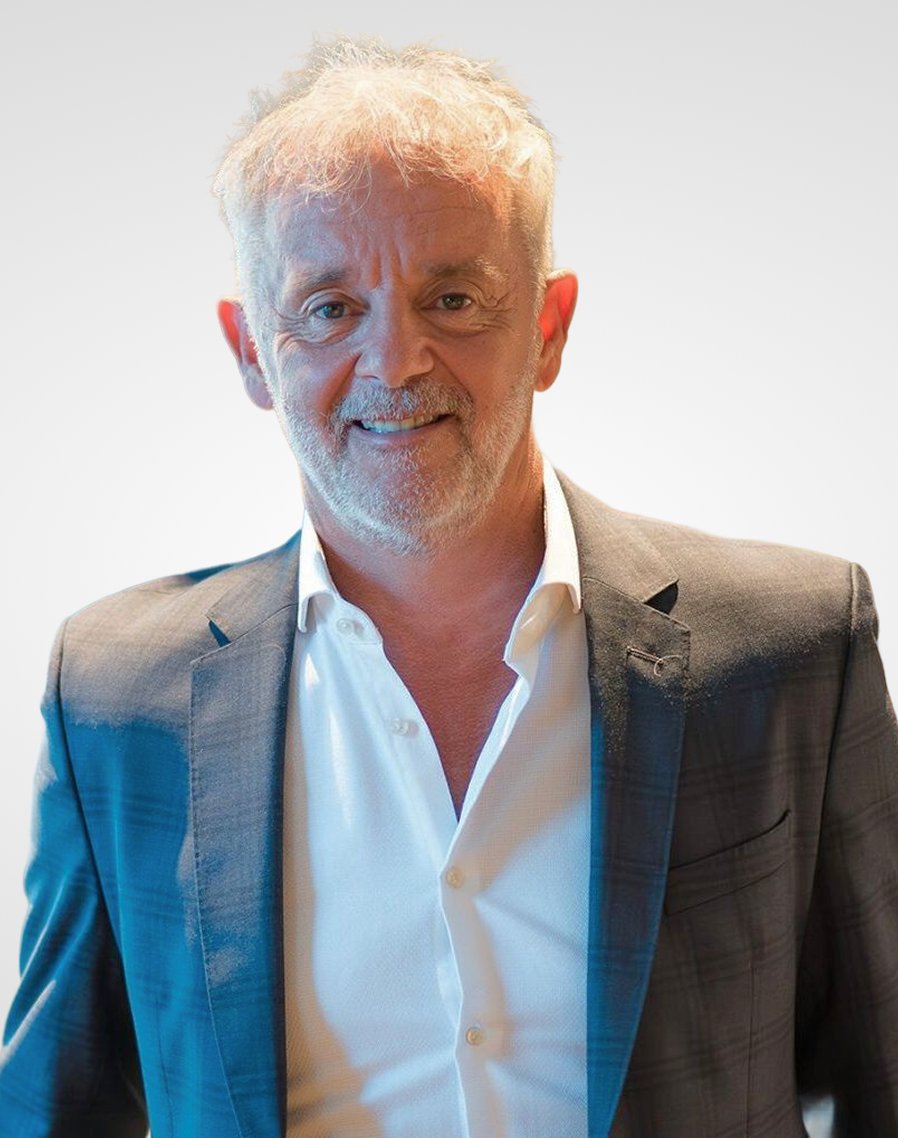
Dr. Leo Pruimboom
President of the Leo Pruimboom Institute & Founder of Clinical Psycho-Neuro-Immunology
Scientific Advisory Board profileIn our conversations about health, vitality and healing, we tend to treat mental and physical health separately. For me, however, everything is an inseparable whole: our biology, our brains and our sense of belonging. In more than 35 years of work in clinical psycho-neuro-immunology (PNI), we have focused on understanding precisely these connections and on turning modern medicine into "complete medicine".
Clinical Psycho-Neuro-Immunology (PNI): The Science That Joins the Pieces
When my patients ask me what I do, I tell them I practise "modern medicine" or "complete medicine". Indeed, to regain our health we must go "back to the future". Medicine, unfortunately, has tended to break everything down into small pieces, creating separate islands such as the cardiovascular system, the neurological system and the endocrine system.
The truth, however, is that
"Everything happens everywhere at the same time".
At the heart of clinical PNI lies the constant communication between the brain and the immune system — the two great "organs" that keep us alive. This communication takes place through countless mechanisms, including neurology, endocrinology, cytokinology and even extracellular vesicles.
Our aim is to bring together all these "islands" that medicine has developed in isolation and turn them into a single "great continent". This field uses not only "hard science" but also "soft skills". This holistic approach is a principle I developed with my colleague Tom Fox, and one we would like to see form the foundation of every medical discipline.
Perspectives That Challenge Traditional Medical Dogma
Our work presents important findings that challenge established medical thinking:
Not Autoimmune, Just Immune Diseases: I object to diseases such as multiple sclerosis (MS) generally being called autoimmune. Our research shows that the immune system is in fact attacking not the body’s own structures but foreign structures that have become incorporated into the brain. For example, when sugar molecules from mammals or lectins from plants are found in the brain, the immune system recognises them as foreign and attacks them.
In this case the immune system makes no mistake; it attacks something that should not be in the brain. The idea that these foreign structures can be replaced by human structures opens new doors in the treatment of the disease.
Symptom Perception Disorder: The symptoms patients feel are not always directly related to the real problem. The insular cortex of our brain is where we perceive our body and our surroundings. In conditions such as chronic fatigue syndrome, atrophy in this cortex can lead people to experience a "symptom perception disorder". For example, they may feel incredibly tired despite having no energy deficit, or feel pain despite there being no damage. We use methods such as the two-point discrimination test to identify this condition; if a person cannot feel the difference between two fingers, they may be experiencing a symptom perception disorder. "A symptom is a symptom, and a problem is a problem".
Genes Are Not Destiny; They Are Activated by Behaviour: A gene is simply a code for a protein and has no purpose or effect on its own. Gene expression depends on our behaviour; the organism is responsible for gene expression. Even genetic predispositions such as immune problems in our family can be explained by the way our parents activated certain genes triggering the same genes that we activate through the "pre-play" and "replay" activities of the brain and spinal cord before we are born. For a gene to cause disease, it must be activated; as long as it is not used, it cannot have a toxic effect. Our behaviour is the main factor that sets our genes in motion.
The Traps of Modern Life and the Paths to Healing
Today’s world is like the planet "Mars" for our genetic make-up. Although our genetic make-up has barely changed in 5,000 years, we can see that the toxins and rapid change of the industrialised world are straining our bodies. Because our rate of adaptation is very slow, I argue that we must speed up this process through our own sense of "agency" and "purpose".
The Healing Power of Nature: "You can take people out of nature, but you cannot take nature out of people." There are studies showing that spending just 120 minutes a week in the forest lowers blood pressure by an average of 12 points. This shows how much we need natural connections to cope with the challenges of modern life.
Lack of Purpose and Loneliness: One of the evolutionary hypotheses for cancer is a lack of purpose in life. Studies at a Danish university suggest that two hours of purpose training in cancer patients can reduce tumour size by 50%. People with addictions who find a purpose in life can sustain their recovery by reorganising their reward systems.
Loneliness is the worst scenario for producing disease. It can directly cause physiological problems such as kidney failure, and this is not psychological but purely physiological. We can no longer separate psychology and physiology; what we think is physiology, and what we feel is physiology.
The 20-Domain Approach: When treating my patients, we explore 20 different domains, from nutrition to sexuality and from singing to rhythms. We see that most pathologically expressed genes are related to deficiencies in these domains.
"The Benefit of Doing Nothing": I argue that the dramatic decline in modern children’s intelligence stems not so much from electronic devices as from a lack of time spent "doing nothing". Doing nothing increases the brain’s spontaneous activity, synchronising neurons and helping to make sense of what has been learned. For example, children’s intelligence has been observed to be eight points higher after the Christmas holidays.
Symptoms Are a Means of Communication: The symptoms in our body are the brain’s only way of telling its host that something needs to change. That is why, rather than treating the symptom, it is essential to understand what it is trying to say. What makes medicine so complex is that a few symptoms can point to many different problems.
A Different View of Global Problems
If there were a single lever to trigger change in the world, I would say it is "deep learning".
I point out that people need to understand that the current polarisation around the world (for example, that triggered by the COVID-19 pandemic) is based on the pathogenic burden. Leaders such as Putin, Trump and Hitler can be described as "germophobes" (people with a fear of germs), because people’s fear of the unknown (neophobia) has an evolutionary basis: infection is the first cause of death in evolution. Vaccines can help evolution (for example, the polio vaccine), but I do not have a black-and-white view on this subject. Bringing true wisdom and knowledge to people, rather than mere information, is the only way to change the world.
As Dr. Leo Pruimboom, my team and I invite you, through this holistic and evolutionary perspective that profoundly shakes our traditional perceptions of health, to rethink our relationships with our bodies, our environment and society. We show that regaining our health is not as difficult as it seems; we simply need to make the right connections and listen to what our body is trying to tell us.
This complex yet entirely logical perspective only gains real meaning when it is turned into action with the right guidance. At this point, I am excited to see pioneering centres in Türkiye that embrace and apply this philosophy.
Cellavia Healthy Living Clinic, building on precisely this understanding of "complete medicine", guides individuals on their journey to take responsibility for their own health. Knowing that the principles I describe do not remain theory but come to life within the walls of a clinic, in the light of science and wisdom, strengthens my faith in the future of modern medicine.
The path to your health lies in listening to your body and finding guides who speak its language.
About the author
Dr. Leo Pruimboom
President of the Leo Pruimboom Institute & Founder of Clinical Psycho-Neuro-Immunology
Scientific Advisory Board profileThis article was published in the 2025 issue of the Cellavia magazine.