

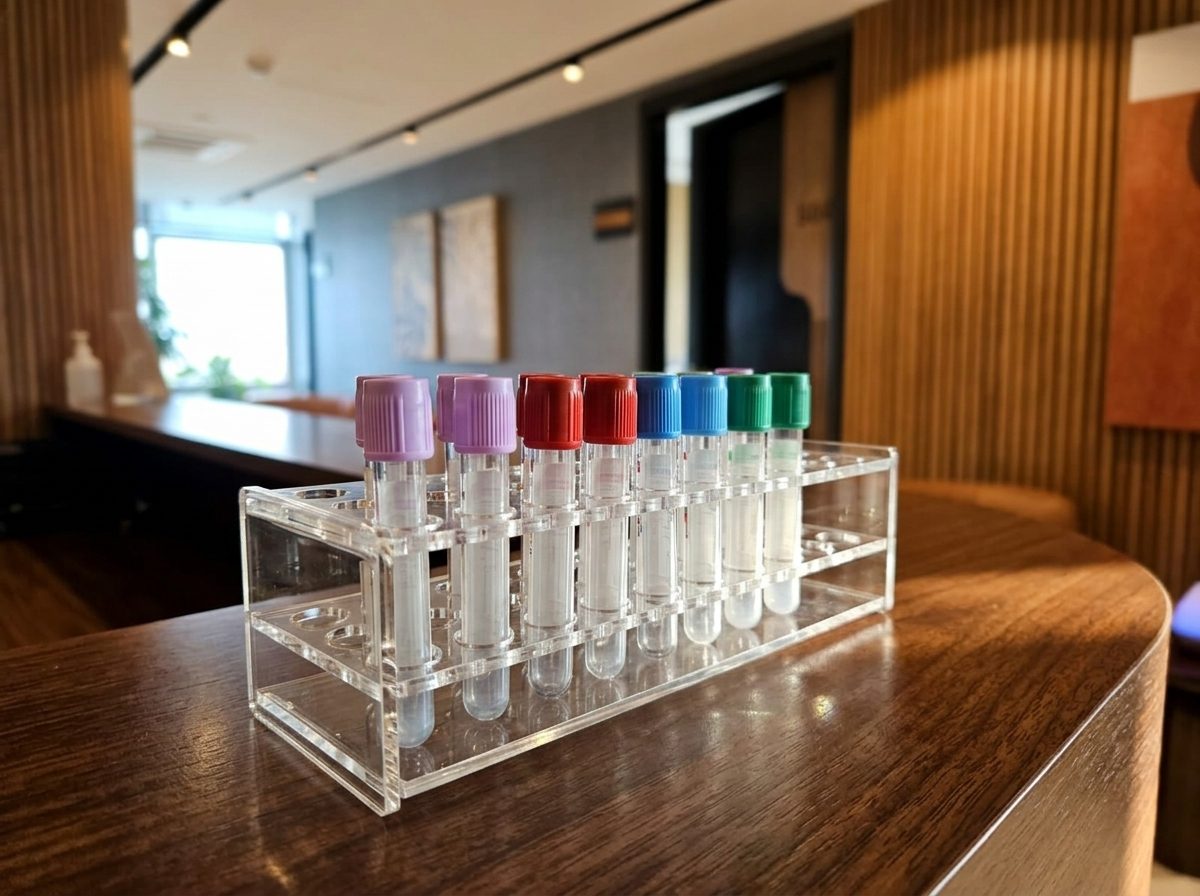
A standard check-up says "normal" or "abnormal". The longevity approach asks: is it in the optimal range? Blood tests are the foundation of every assessment at Cellavia, and all our other measurements are built on this solid ground.
Our approach
Your tests are not selected from a routine list but according to your age, sex, health history and goals, under the supervision of our physicians. We assess your results not only against reference ranges but in relation to each other and to your lifestyle.
Test panels
The main groups of tests used in our assessments are:
General health
A first look at the body’s overall picture.
- Complete blood count (haemogram)
- Erythrocyte sedimentation rate
- Complete urinalysis
Metabolic health
Blood sugar balance and insulin sensitivity: the key indicators of metabolic flexibility.
- Fasting blood glucose
- HbA1c (three-month average blood glucose)
- Fasting insulin
- HOMA-IR (insulin resistance index)
Heart and vascular health
Not just the amount of cholesterol, but its carrier particles and inherited risk factors.
- Total cholesterol, LDL, HDL, triglycerides
- Apolipoprotein B (ApoB)
- Lipoprotein(a)
- Homocysteine
Inflammation and immunity
Markers of a silent, low-grade inflammatory load in the body.
- High-sensitivity CRP (hs-CRP)
- Ferritin
- White blood cell differential
Liver and kidneys
How the body’s cleansing and filtering systems are working.
- ALT, AST, GGT, ALP
- Bilirubin
- Creatinine and eGFR
- Uric acid
- Albumin and total protein
Thyroid
The regulator of energy, metabolism and temperature control.
- TSH
- Free T3 and free T4
- Anti-TPO
Hormonal balance
Hormones related to stress, energy, muscle mass and ageing; selected according to age and sex.
- Cortisol
- DHEA-S
- IGF-1
- Testosterone (total and free)
- Oestradiol, FSH, LH (in women, according to cycle phase)
Vitamins and minerals
The silent building blocks of cellular function.
- Vitamin D (25-OH)
- Vitamin B12 and folate
- Iron, iron-binding capacity
- Magnesium
- Zinc
- Calcium and phosphorus

How is blood taken?
Your blood sample is taken at our clinic by our nurse. For tests that require fasting, we schedule your appointment in the morning and send you the preparation instructions in advance. Usually 10–12 hours of fasting with water only is required.
How are the results reviewed?
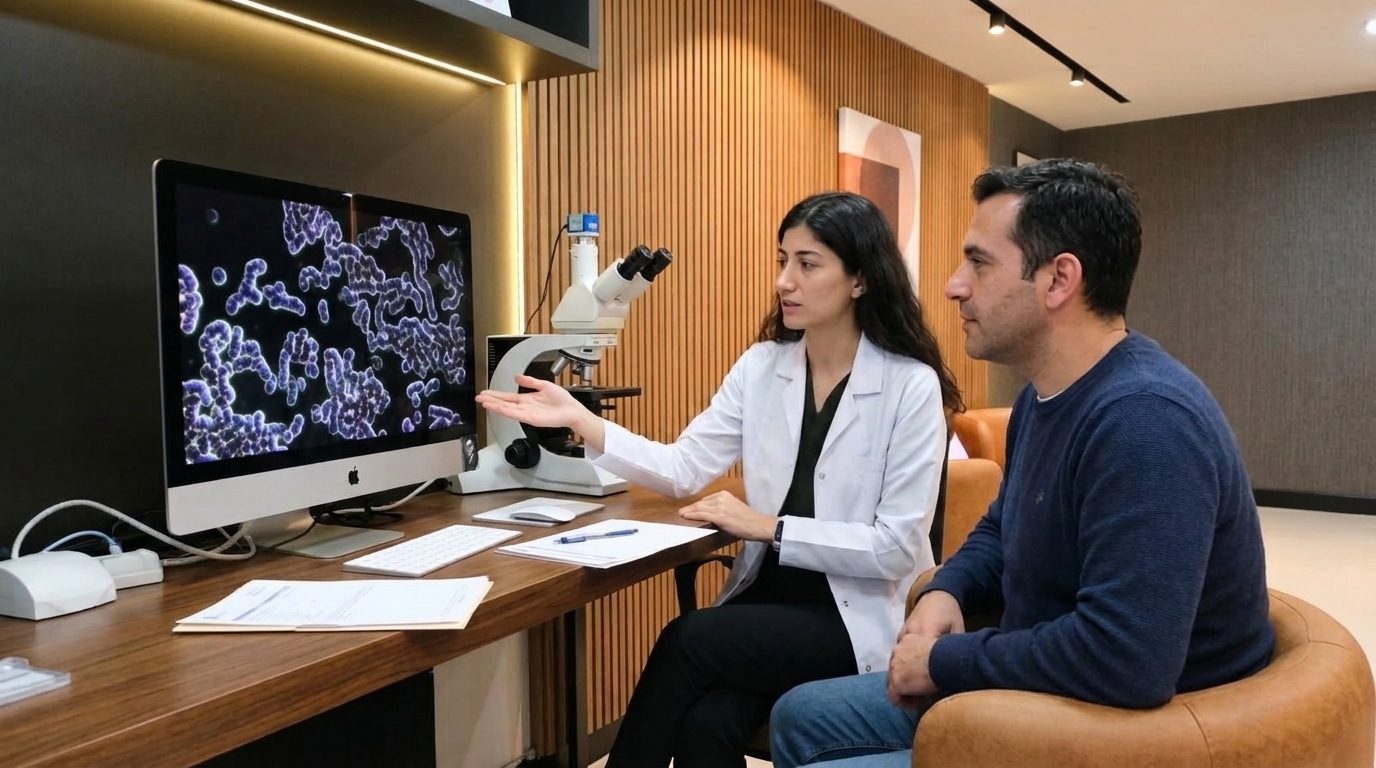
When your results are ready, they are discussed one by one with your physician. Blood tests are interpreted together with DNA analysis, oxidative stress measurement and other cellular measurements to form the basis of your personalised therapy plan. At the end of the programme, selected parameters are repeated to track the change.
Which programmes include it?

Frequently asked questions
How long do comprehensive blood tests take?
About 10 minutes. The exact duration is planned by our team according to your assessment and programme.
When and how are the results of comprehensive blood tests reviewed?
Most tests take 1–3 working days; some specialised tests take longer. Your results are always reviewed with a specialist physician, in clear and understandable language.
Is any preparation needed for comprehensive blood tests?
Usually 10–12 hours of fasting. We send you the necessary preparation instructions before your appointment.
Who are comprehensive blood tests not suitable for?
Eligibility is always determined by a physician’s assessment. In conditions such as pregnancy, cardiovascular disease and uncontrolled chronic illness, some applications are not performed or require a physician’s approval.