


At Cellavia, every programme starts from the same point: a comprehensive assessment by a physician. On this page we explain how a programme unfolds from start to finish, the principles it is based on and where we draw the line.
A journey in four steps
Stage 1Discovery
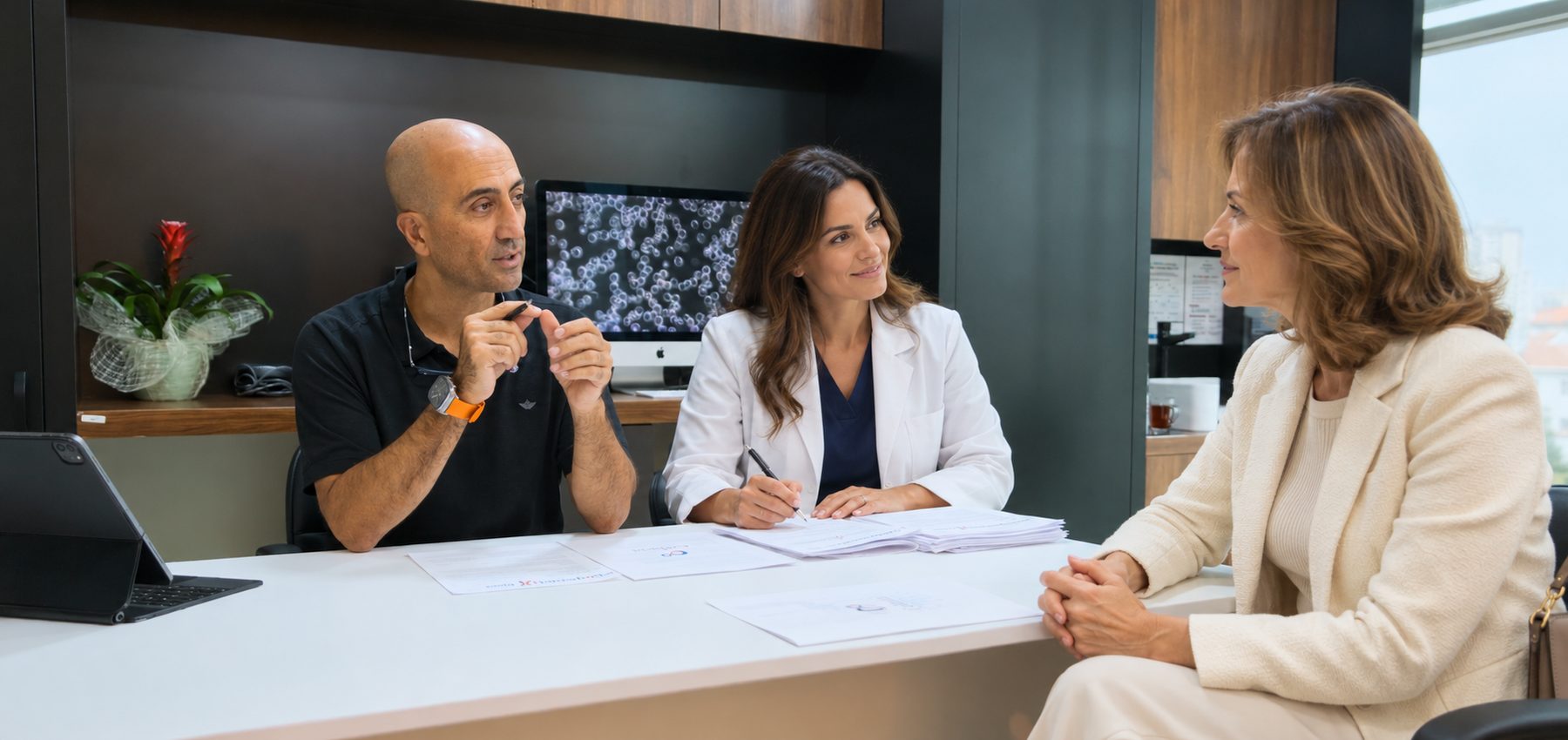
The first consultation is a far more comprehensive clinical assessment than a standard examination. Your physician reviews your health history, the medicines you take, your sleep, your nutrition, your work pace and your sources of stress in detail. Your priority health goals and a one-year target picture are set together.
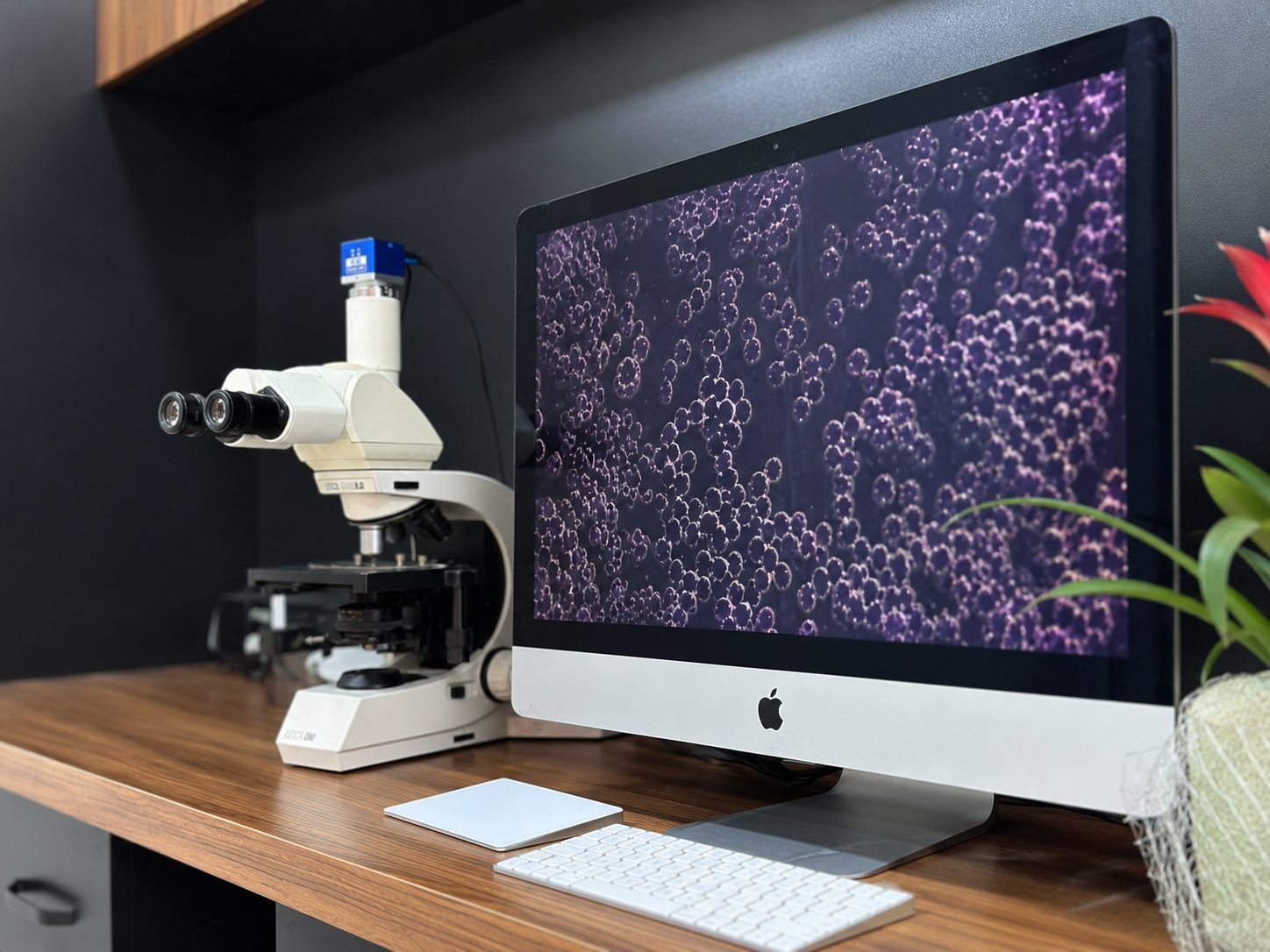
Suitable measurements are then planned for you. These may include comprehensive blood tests, live blood examination with dark-field microscopy, measurement of oxidative stress with FRAS 5, a mineral balance scan with OligoScan, biothermology and, where needed, spiroergometry, DNA analysis, telomere measurement and epigenetic tests. Each measurement is done to answer a question; not all of them are performed routinely.
Stage 2Personal plan
Once the results are in, a team of physician, osteopath, physiotherapist, dietitian and clinical psychologist reviews your file together. This review determines which treatments are done, in what order and at what intensity. Your nutrition protocol follows the same plan.

The plan is presented to you at a results consultation, together with the reasoning behind it. We explain openly and with reasons why we recommend each application, what we will monitor and what we expect from you. No step you have not approved goes into the plan.
Stage 3Application and follow-up
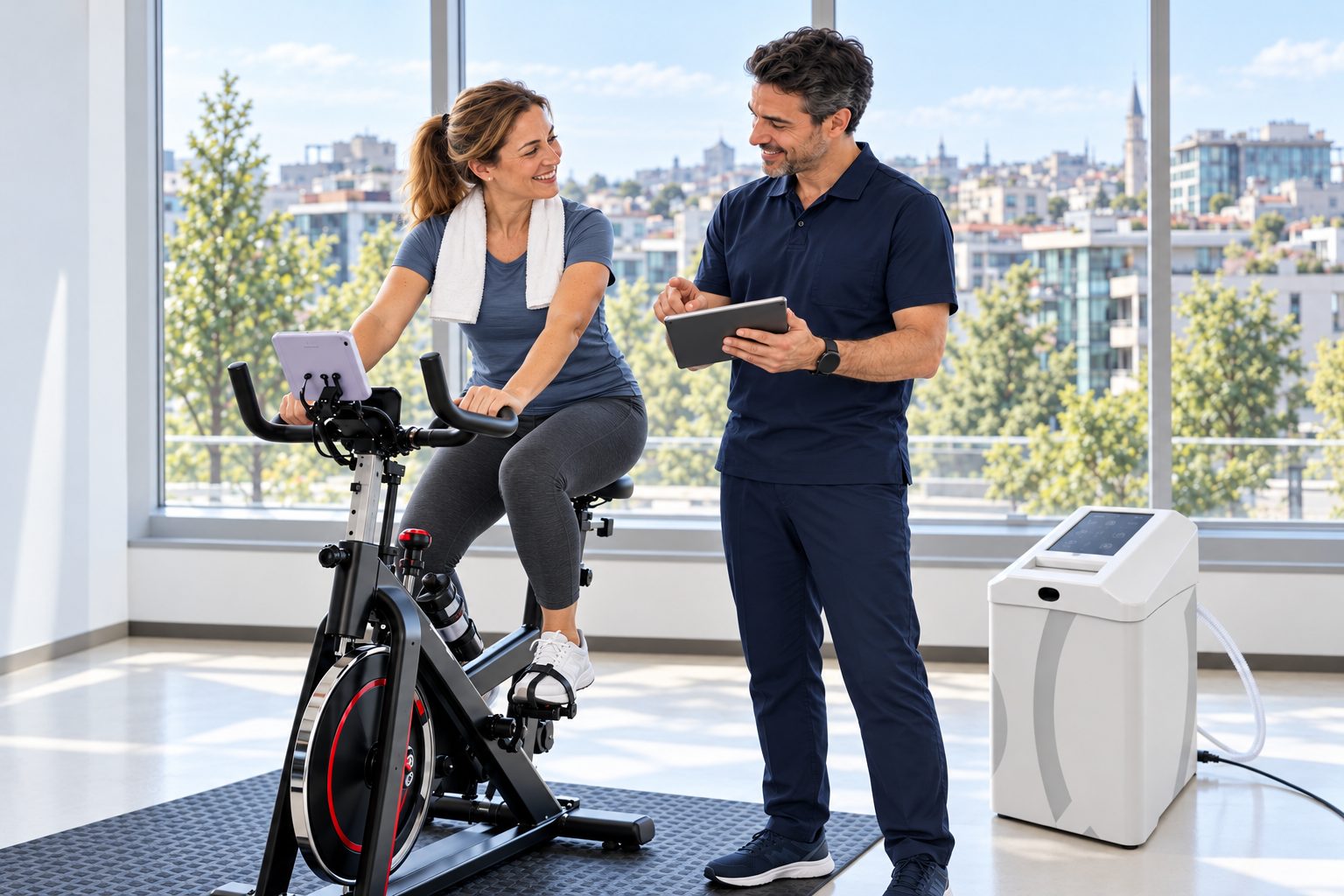
Sessions are planned around your work and family calendar. Each week a short check looks at your measurements and how you feel. If your body responds to an application differently than we expected, we do not hesitate to change the plan. Throughout the process you can reach your team directly.
Stage 4Completion and maintenance
At the end of the programme, the opening measurements are repeated and the results are reviewed one by one with a specialist physician. We assess together what has changed, what has not and what it means. We then agree on the habits you will continue at home, your nutrition routine and the date of your next check-up. The end of the programme is not the end of our partnership.
The Three Pillars of Holistic Medicine
Our applications rest on three clinical pillars. Every protocol is built on these three pillars; your clinical assessment results determine which carries the most weight.
 Cellular resilienceSupporting the body’s adaptive capacity with controlled stimuli through hypoxia applications, cryotherapy and infrared hyperthermia.
 Structural balanceWorking on posture, movement and the musculoskeletal system with osteopathy, manual therapy, physiotherapy and ICAROS.
 Mind, body and immunityAddressing the balance of the whole with clinical psycho-neuro-immunology, personalised nutrition and, where appropriate, infusion protocols.
Hormesis: the right dose of challenge
For thousands of years the human body lived with cold, heat, hunger and high altitude. These short-lived challenges did not wear the body down; on the contrary, it became more resilient as it adapted to them. Science calls this principle hormesis: a short stimulus at the right dose can activate the body’s repair and defence mechanisms.
Modern life, by contrast, keeps us in a permanent comfort zone: always fed, always warm, always still. Our hypoxia, cryotherapy and hyperthermia applications apply this principle in a controlled setting, based on measurement. The key word here is "dose": too much does harm rather than good. That is why the intensity and frequency of each stimulus are set individually and increased gradually.
Clinical psycho-neuro-immunology
Clinical psycho-neuro-immunology, or cPNI for short, is an approach that treats the relationship between the mind, the nervous system, hormones and immunity as a whole. It seeks to understand how chronic stress affects immunity, how gut health affects mood and how lack of sleep affects metabolism.
This perspective is concerned less with "what" a complaint is than with "why" it arose. The founder of the approach, Dr. Leo Pruimboom, is also a member of the Cellavia Scientific Advisory Board.
Biological medicine
Biological medicine places the body’s capacity for self-regulation at its centre. It holds that many of the conditions we call disease are related to this capacity weakening over time. The aim is not simply to suppress a symptom, but to support fundamental areas such as the gut barrier, cellular energy production and the balance of the nervous system. Dr. Ralf Oettmeier, medical director of Alpstein Clinic in Switzerland, shares his expertise in this field with our Scientific Advisory Board.
Our boundaries
Saying what we do not do is as important as explaining what we do. Our programmes do not replace any medical treatment. We do not advise you to stop the medicines you take; your ongoing treatment remains the responsibility of your own physician.