

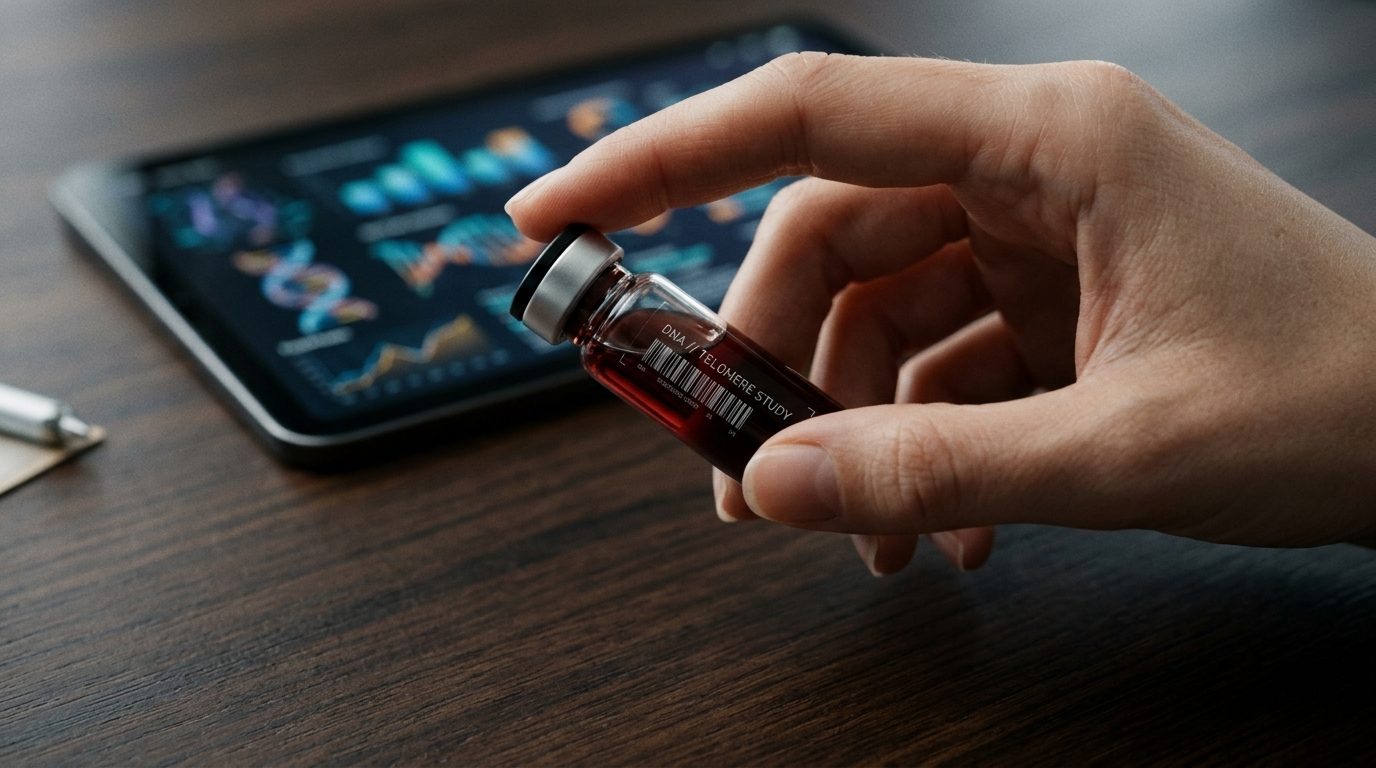
Think of the plastic tips at the ends of shoelaces. Telomeres protect the ends of our chromosomes in a similar way.
What is a telomere?
Telomeres are repetitive DNA sequences at the ends of chromosomes that protect genetic information. Each time a cell divides, the telomeres shorten slightly. That is why telomere length is intensively researched in science as one of the markers of cellular ageing.
Research suggests that lifestyle factors such as chronic stress, sleep patterns, nutrition, physical activity and smoking may be associated with telomere length. This makes telomere measurement an interesting window onto your biological state, independent of your chronological age.

How is it measured?
The measurement is carried out on a blood sample using laboratory methods. The result is reported in comparison with reference values for your age group.
What does the result mean?
Telomere length on its own is not a marker of disease and is not used to predict lifespan. There are natural differences between individuals, and results may vary depending on the measurement method. That is why we do not interpret the result on its own, but as part of a holistic picture together with epigenetic tests, laboratory results and a physician’s assessment.
Why does follow-up matter?
A single measurement is a starting point. Measurements repeated at set intervals after lifestyle changes can help you follow your own biological journey.
Which programmes include it?
Following a physician’s assessment, this measurement can be planned as needed as part of the longevity assessment and one-month programmes.

Other measurement methods
- Dark-field microscopy. Examination of a single drop of blood in its living state, without staining. Explore
- DNA analysis. A personal guide showing your genetic tendencies relating to nutrition, exercise and metabolism. Explore
- Epigenetic test. Shows how your lifestyle is reflected in the way your genes work, together with biological age markers. Explore
- FRAS 5 oxidative stress measurement. Measurement of the balance between free-radical load and antioxidant defence. Explore
- OligoScan. A needle-free mineral and heavy-metal screening taken from the palm of the hand in a few minutes. Explore
- Biothermology. Assessment, by mapping heat distribution across the body, of the thermoregulatory response. Explore
- Spiroergometry. Determining personalised training zones by measuring oxygen use during exercise. Explore
Frequently asked questions
When and how are the results of telomere measurement reviewed?
A few weeks, depending on the laboratory. Your results are always reviewed with a specialist physician, in clear and understandable language.
Is any preparation needed for telomere measurement?
Your physician will advise you. We send you the necessary preparation instructions before your appointment.
Who is telomere measurement not suitable for?
Eligibility is always determined by a physician’s assessment. In conditions such as pregnancy, cardiovascular disease and uncontrolled chronic illness, some applications are not performed or require a physician’s approval.