


Cellavia · Microbiome and gut health
GenoBiome
Discover the ecosystem within you.
- 5main bacterial phyla
- 3diversity indicators
- 40related health topics
- Next-generation shotgun DNA sequencing
- Non-invasive sample
- A gut health plan with your dietitian
What is it?
The invisible ecosystem in your gut
Trillions of microorganisms live in our gut, playing a role in processes from digestion to immunity. This community is as personal as a fingerprint.
GenoBiome examines your gut microbiome from a stool sample using next-generation shotgun DNA sequencing and bioinformatic analysis. It presents the distribution and diversity of microorganisms and health-related functional patterns in a personal profile.
 The preliminary consultation, interpretation of the report and gut health plan are carried out by Cellavia's physicians and dietitians; sequencing and bioinformatic analysis are performed by our partner GENOMEDİS.

A map unique to you
Your microbiome is like no one else's. Instead of general advice, you see your own gut ecosystem.
Guides your nutrition
Fibre, prebiotic and probiotic options are planned with an expert, together with your findings, symptoms and clinical data.
Tracks change
The microbiome is dynamic; the effect of your plan can be tracked with a follow-up test.
Did you know?
About your microbiome
The gut microbiota is one of the most researched health topics of recent years. A few examples:
Trillions of microbes
The number of microorganisms living in the gut is of the same order as the number of human cells in our body.
Fibre
Gut bacteria ferment the fibre we cannot digest into short-chain fatty acids such as butyrate – an important source of energy for gut cells.
Antibiotics
Antibiotic use can reduce microbiome diversity, temporarily or for longer.
The gut–brain axis
The gut microbiota communicates with the brain through nerve, immune and hormonal pathways; this link is the subject of intensive research.
These examples are for general information; what they mean for you becomes clear through your report and physician consultation.
Report
What does your report include?
Microbial distribution, diversity and functional context in a single personal profile.
Microbial composition · illustrative view
- Bacteroidetes
- Firmicutes
- Actinobacteria
- Proteobacteria
- Verrucomicrobia
Species richness
Shannon diversity
Evenness
The chart is illustrative; your report shows your own values compared with a reference population.
Report sections
- Microbial compositionMain bacterial phyla, species and genus distributions; relative abundances compared with a reference population.
- Richness, diversity and evennessSpecies richness, the Shannon diversity index and evenness indicators; the Firmicutes/Bacteroidetes ratio.
- Functional groupsButyrate-producing bacteria and species with probiotic potential; the context of fibre and short-chain fatty acids.
- Associated microorganismsBacteria, fungi (e.g. Candida) and viruses covered by the panel, interpreted in clinical context.
- Health-related patternsMicrobiome profiles linked to health in the scientific literature, across 40 topics.
- Personal recommendationsNutrition, fibre, prebiotic/probiotic and lifestyle options, reviewed with an expert.
Health-related patterns
Microbiome profiles across 40 topics
The report examines health topics linked to the microbiome in the scientific literature, grouped into four main areas.
Digestive system
Topics related to the gut, stomach and liver; bloating, gas and food intolerances.
Heart and metabolism
Topics related to cholesterol, blood pressure, blood sugar and clotting.
Brain and mood
Neurological and psychological topics linked to the gut–brain axis.
Immunity and other systems
Joint, muscle, bone, respiratory, skin and urinary tract topics.
These profiles are neither a diagnosis nor a definite risk; the presence or amount of specific microorganisms does not on its own indicate a disease. Additional biomarkers (calprotectin, zonulin) are measured separately where needed.
Process
Your microbiome profile in four steps
Our team manages the whole process, from the preliminary consultation to your personal plan.
- 01
Initial consultation
Your digestive symptoms, diet, medicines and antibiotic history are reviewed; together you decide whether the test is right for you.
- 02
Sampling
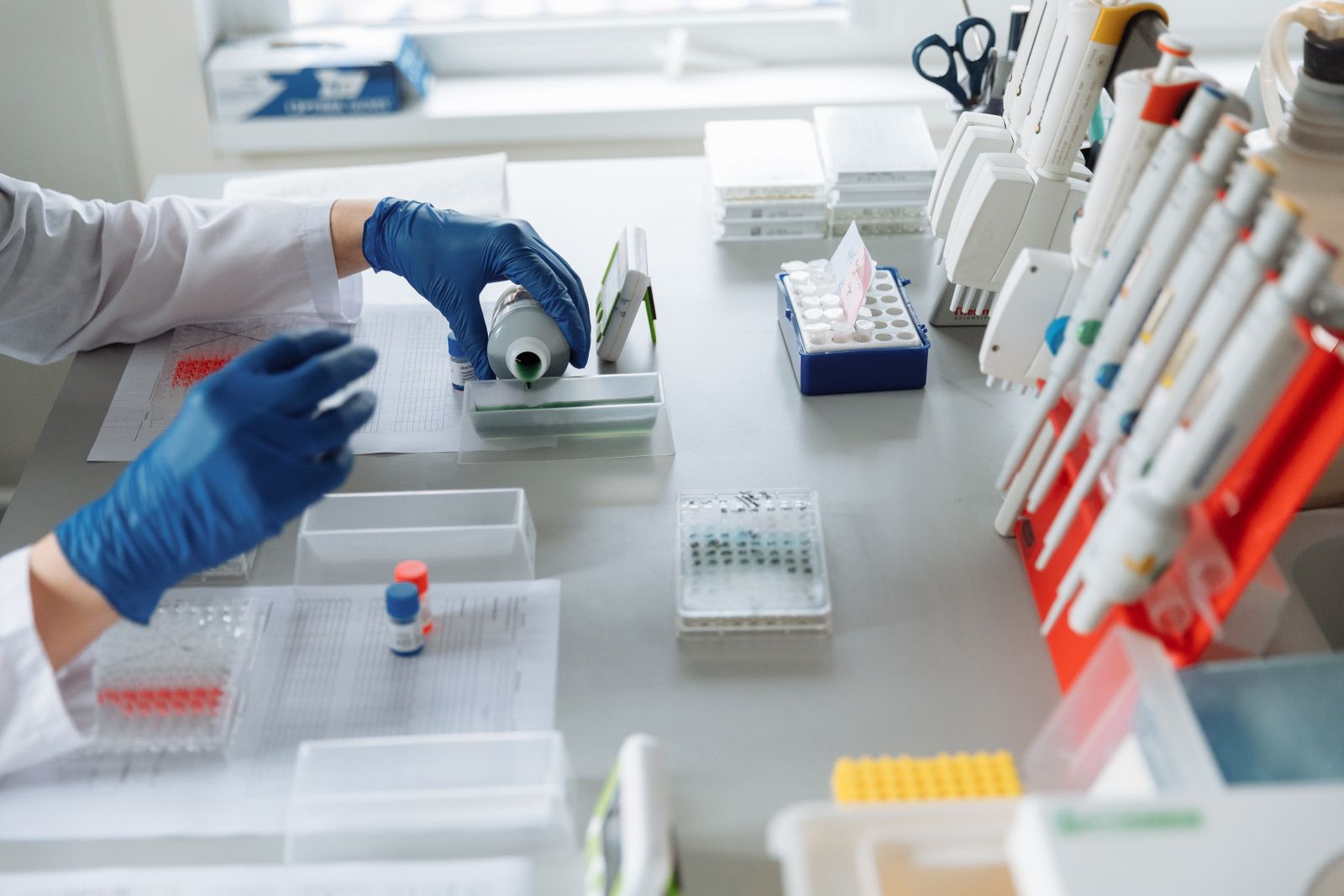
The stool sample is collected according to the instructions you receive. It is a non-invasive method.
- 03
Next-generation sequencing
All microbial DNA in the sample is sequenced with the shotgun method and compared with a reference population through bioinformatic analysis.
- 04
Report and plan
The report is read with your physician and dietitian and turned into your nutrition, fibre and lifestyle plan.


After the report
How do the results become a programme?
The report is a starting point. Its value comes when your physician and dietitian help you bring it into everyday life.
Dietitian consultation
Findings are discussed together with your eating habits and symptoms.
Fibre and prebiotic plan
Fibre diversity and prebiotic foods are planned around your microbiome profile.
Condition-specific support
Probiotics or other supplements are considered with your physician where needed.
Follow-up test
The effect of the plan on your microbiome is tracked with a follow-up test after a while.
Plan your gut health with an expert
At Cellavia, GenoBiome begins with a preliminary consultation; your report is turned into a personal gut health plan with your physician and dietitian.
Frequently asked questions
What people ask
Does GenoBiome diagnose disease?
No. A microbiome profile is neither a diagnosis nor a validated disease risk test, and it does not replace infection tests. Findings are interpreted by a specialist together with your symptoms and clinical data.
How is the sample collected?
The stool sample is collected according to the instructions you receive and sent to the laboratory. We give you full details at the preliminary consultation.
I recently took antibiotics – can I still be tested?
Antibiotics can temporarily change the microbiome. The timing of the test is planned with your physician at the preliminary consultation, taking your medicines into account.
Should I take probiotics based on the results?
Prebiotic and probiotic options are not based on the report alone; a specialist assesses them together with your symptoms, diet and clinical data.
Is the test repeated?
The microbiome is dynamic and changes with nutrition and lifestyle. The test can be repeated after a while to see the effect of your plan.
Are calprotectin and zonulin in the report?
These markers are not derived from microbiome sequencing; where needed, they are assessed with a separate measurement.
Limits of the results
Genetic analysis does not diagnose and does not recommend treatment. A tendency does not mean a trait will necessarily develop; nutrition, lifestyle, environment and overall health also shape the outcome. Findings do not replace measured biomarkers and are always interpreted together with your medical history, examination and laboratory results. A microbiome profile is neither a diagnosis nor a validated disease risk test; it does not replace infection tests. Additional biomarkers require separate measurement.
Your genetic data and privacy
Genetic data is personal and sensitive. Your results are shared only with you and, with your consent, with your care team, and are stored in line with data protection law.
Consultation
Begin Your Personal Longevity Journey
To decide on the right protocol for you, let us review your medical history, your cellular status and your health goals together with our specialist physicians. Contact our team to arrange your first consultation.